


The Real Albergo dei Poveri, Naples

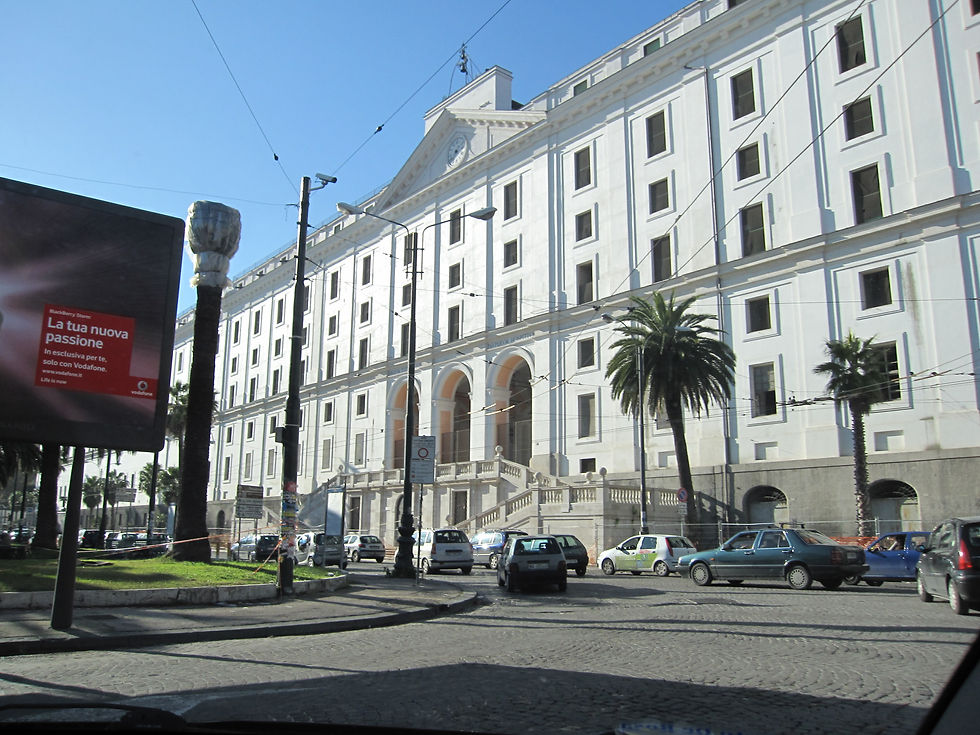
On the streets of Naples, lies Europe's largest public palace, Palazzo Fuga or the Albergo dei Poveri. And when you think of a palace, you would generally think luxuriously long halls, finely decorated rooms, and a wealthy or noble resident. And whilst the Albergo dei Poveri is grand and extensive, it was actually built not for nobility, but rather to house the poor during a time of growing poverty in Naples.
Construction began in 1752, by Italian architect Ferdinando Fuga, in what was to become the massive seven story Albergo dei Poveri. The project was funded by King Charles of Bourbon, and his aim was to accommodate the masses of poor within the kingdom and was considered a dedicated hotel to the poor. It was intended to include workhouses, hospitals, orphanages and asylums, with the hopes that it would host, educate and rehabilitate the poorest of the region
. Though it came with complications, due to the scale of the project it took a long time and lots of money to complete. Upon Fuga's death in 1782 it was still incomplete, and its construction came to an end in 1819, and was only a portion of the original projected plans.

The initial plans would accommodate up to 8 thousand individuals, and they would be divided into men, women, boys and girls. And they were to be totally separated from each other, unless they were at work. From 1802 it began to house orphans, whilst they were there, they were provided education and employment.
Throughout the late 19th century, the building had many uses, most remaining in the area of education and rehabilitation, still maintaining its welfare imprint. This continued into the 20th century, until and earthquake in 1980 caused parts of the building to collapse.
As for today, there has been restorations done on the building and there appears to be a desire to recover the complex as a cultural center.

Comments